
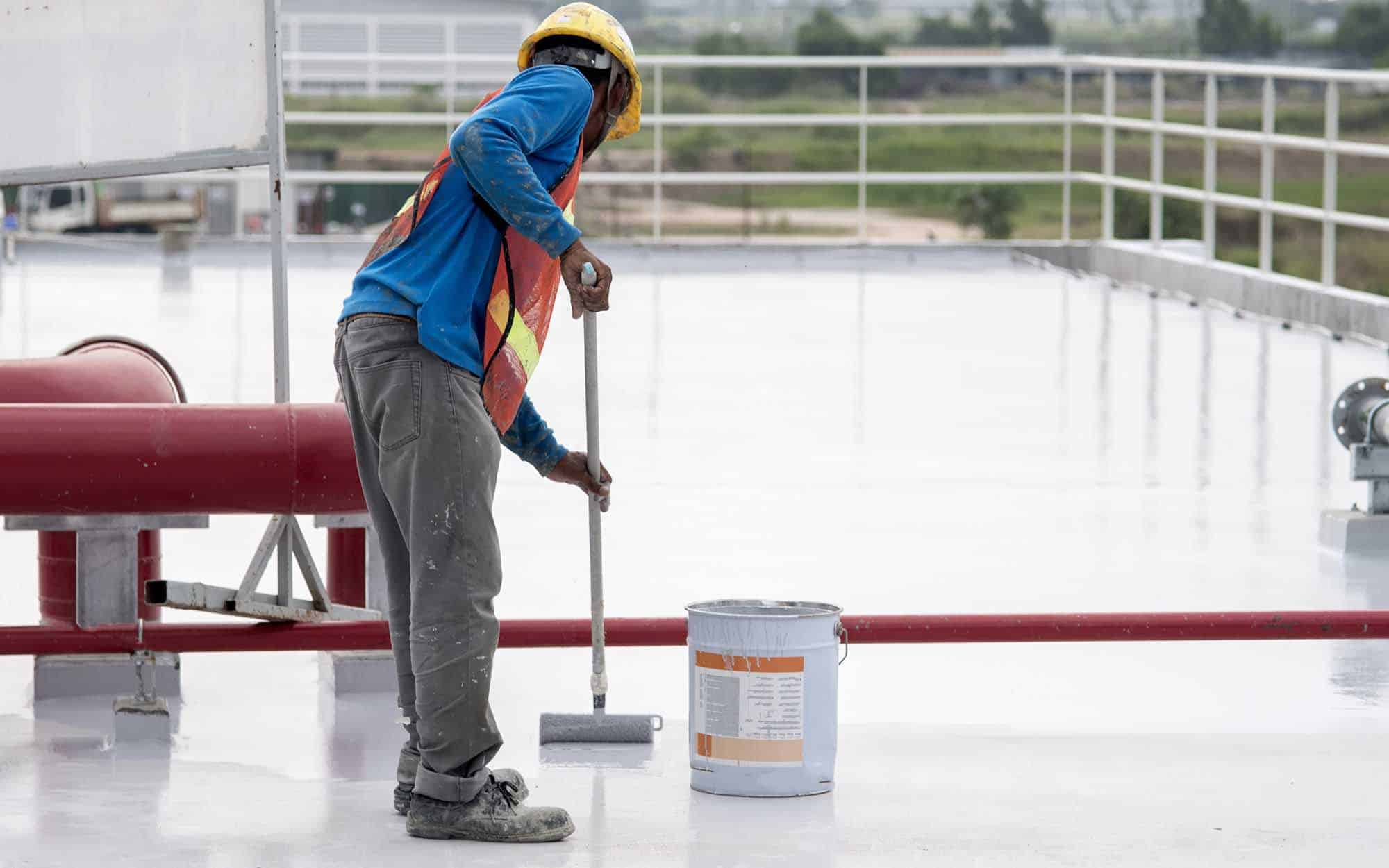
Acrylic Roof Coatings: A Commercial Roof Restoration Case Study
The following case study illustrates a representative commercial roof restoration scenario based on conditions commonly evaluated during coating projects. It is not presented as a specific Higher Level Roofing customer project. Actual roof conditions, specifications, installation requirements, and results vary by building and coating system.
The Situation: An Aging Commercial Roof That Wasn’t Necessarily Finished
Consider an occupied commercial building with a low-slope roof that has been in service long enough to show visible weathering. The roof has received several localized repairs over time. Maintenance records exist, but they don’t provide a complete picture of why certain areas required attention or whether those conditions are connected.
The building owner is considering replacement. At the same time, much of the existing roof appears potentially serviceable, making Acrylic Roof Coatings worth evaluating as part of a restoration strategy.
The goal is not simply to make an older roof look new. The actual question is more demanding: Can the serviceable portions of the existing roof be preserved while identified deficiencies are corrected and the surface receives a compatible protective coating system?
Reflectivity is another consideration. Many acrylic roof coatings are available in highly reflective formulations, allowing the finished roof surface to reflect a greater portion of incoming solar energy than many darker surfaces. But the owner does not want to base the project on a promised percentage of energy savings. Reflectivity can be measured at the roof surface; whole-building energy performance depends on insulation, HVAC efficiency, climate, occupancy, operating schedules, and other variables.
1 occupied commercial building
1 existing low-slope roofing assembly under evaluation
2 potential paths: restoration or more comprehensive replacement
0 assumptions that coating is automatically the correct answer
The Challenge: Determine What the Roof Actually Needs
The most important stage happens before a coating system is specified. The roof needs to be evaluated as an assembly rather than judged primarily by age or appearance.
For this representative scenario, the assessment focuses on seven condition categories: the existing roof surface and substrate, previous repairs, seams or joints, flashing, penetrations and equipment curbs, drainage, and evidence that may indicate moisture-related concerns.
Why examine so much if the project is supposedly about coating? Because a fluid-applied material cannot compensate for conditions that should have been corrected first. If deterioration is too widespread, the substrate is unsuitable, or underlying problems extend beyond a reasonable restoration scope, coating may not be the responsible recommendation.
| Before Assessment | After Assessment |
|---|---|
| “The roof looks old.” | Specific conditions and deficiencies documented |
| Repair history viewed as unrelated patches | Previous repair areas mapped and evaluated |
| Coating compatibility unknown | Substrate and system compatibility evaluated |
| Drainage visually assumed to be adequate | Drains, scuppers, and water pathways inspected |
| Acrylic considered by coating category alone | Specific system considered against actual roof requirements |
Moisture deserves particular attention. An apparently weathered surface does not tell the entire story of what may be happening within the roofing assembly. Where observations or roof history suggest possible moisture-related conditions, appropriate investigation can help establish whether affected areas require corrective work or whether restoration remains suitable at all.
Compatibility presents another challenge. Commercial roofs often contain multiple generations of materials: the original surface, older repair products, newer flashing around replacement equipment, sealants, and modified details. The proposed acrylic system must be appropriate for the materials that will remain.
The assessment therefore changes the nature of the project. Instead of asking, “How much acrylic coating does this roof need?” the owner can ask the more useful question: “What needs to happen before this roof is ready for acrylic coating?”
7 primary condition categories reviewed
3 critical decision areas: restoration eligibility, compatibility, and preparation
1 objective: determine whether the existing assembly provides a suitable foundation
The Solution: Build the Coating Project Around Preparation
Once the representative roof is considered suitable for restoration, the scope can move toward Protective Roof Coating Systems. Acrylic is not selected simply because it is reflective or fluid-applied. The specific product and system need to match the existing substrate, project conditions, and manufacturer requirements.
The restoration strategy follows a controlled sequence:
- Document existing conditions. Establish the starting point and define the repair scope.
- Complete necessary corrective work. Address identified defects, including relevant flashing, seams, penetrations, curbs, or other details.
- Prepare the surface. Clean and condition the existing roof according to the coating system requirements.
- Prime or reinforce where specified. Treat substrates and details according to the approved system design.
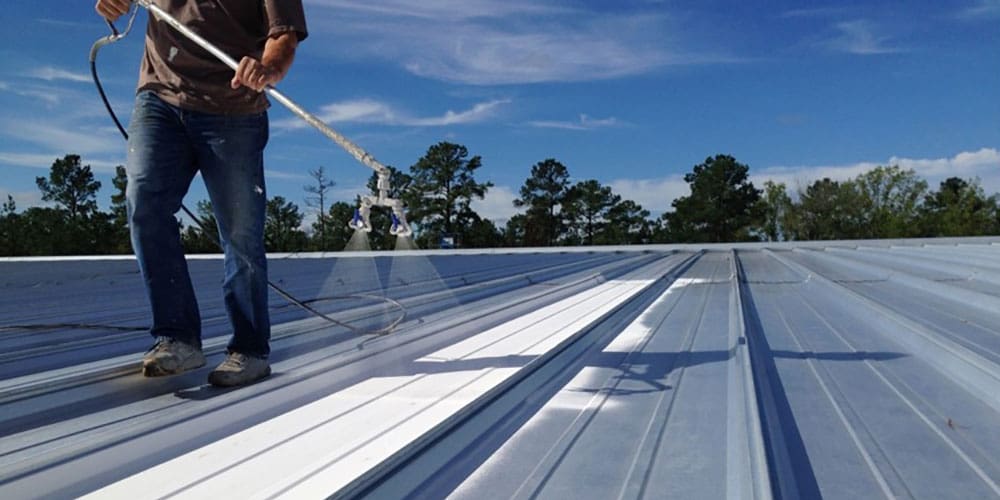
- Apply the acrylic system. Follow specified coverage, thickness, environmental, and curing requirements.
- Verify and document. Complete quality-control review and establish records for future roof management.
Acrylic coatings can offer elastomeric characteristics, allowing specific formulations to accommodate movement within their tested performance limits. Reflective formulations can also change the solar characteristics of the roof surface. Neither benefit removes the need for careful preparation.
Weather conditions during application matter as well. Acrylic products have manufacturer-defined requirements for temperature, moisture, drying, curing, and recoat conditions. Scheduling therefore becomes part of quality control rather than simply a logistical concern.
The coating is the visible result, but the project is really built during assessment, repairs, preparation, and detailing. A restoration system cannot perform independently of the roof beneath it.
Project Timeline: From Evaluation to Finished System
PHASE 1 — Roof Assessment
Document existing conditions, review repair history, evaluate restoration eligibility, and investigate moisture-related concerns where appropriate.
PHASE 2 — Corrective Work
Complete identified repairs and address relevant seams, flashing, penetrations, curbs, drainage details, and other deficiencies included in the restoration scope.
PHASE 3 — Surface Preparation
Clean and prepare the substrate, verify compatibility, and use primer or reinforcement where the specified acrylic system requires it.
PHASE 4 — Acrylic Application
Install the coating according to manufacturer requirements for coverage, thickness, weather conditions, application, curing, and recoating.
PHASE 5 — Quality Control
Review completed details, reconcile materials where appropriate, document the finished condition, and create a baseline for future inspections.
No artificial “Day 1–Day 5” schedule is assigned to these phases. Roof area, existing conditions, repair scope, coating specification, weather, and curing requirements determine the actual project duration.
The Results: A Roof with a New Management Baseline
Because this is a representative case study rather than a documented customer project, the results should be understood as the intended, verifiable outcomes of the restoration process rather than claims about a specific building.
The first outcome is preservation. Instead of automatically removing an existing roof solely because it appears weathered, the process identifies which components remain suitable for continued service and which conditions need corrective work before coating.
The second outcome is a defined protective surface. Once repairs, preparation, and detailing are complete, the specified acrylic system creates a continuous fluid-applied coating across the areas included in the restoration scope. The finished system is no longer simply an aging roof with scattered repair histories; it has a documented coating specification and a known post-restoration condition.
Reflective performance is another measurable outcome when a reflective acrylic product is selected. Product data can establish solar reflectance and thermal emittance values under applicable test methods. Those values describe roof-surface characteristics without turning them into unsupported promises about whole-building energy savings.
Finally, the restoration creates something that is easy to underestimate: a new maintenance baseline. Photographs, repair locations, product information, material records, and inspection documentation give facility managers a reference point for evaluating future changes.
| Before Restoration | After Restoration |
|---|---|
| Weathered existing surface | Continuous specified coating surface |
| Multiple historical repair areas | Corrective work completed and locations documented |
| Limited project records | New installation and inspection baseline |
| Coating requirements undefined | Defined product, coverage, preparation, and application requirements |
| Maintenance driven primarily by visible problems | Condition-based inspection plan supported by project records |
RESULTS SUMMARY
✓ Serviceable existing roofing components preserved where appropriate
✓ Identified deficiencies addressed before coating application
✓ Continuous protective acrylic surface established according to the specified system
✓ Reflective roof-surface properties defined by applicable product data
✓ Installation records created for future inspections and maintenance
Metrics Summary: What Can Actually Be Measured?
Case studies are most useful when their metrics reflect information that can actually be documented. For a roof coating project, that means distinguishing between installation metrics and speculative predictions.
Roof area can be measured. Material quantities can be recorded. Specified coverage and system thickness can be documented. Repair locations can be mapped. Product performance data can establish relevant coating properties. Inspection findings can be photographed and recorded.
By contrast, claims such as a universal percentage of energy savings or a guaranteed number of additional service years require building- and system-specific evidence. They should not be invented simply to make a case study appear more impressive.
METRICS SUMMARY — REPRESENTATIVE RESTORATION
5 primary project phases
7 roof-condition categories evaluated during planning
3 core quality-control areas: preparation, application, documentation
2 measurable reflective properties commonly reviewed: solar reflectance and thermal emittance
0 universal assumptions about energy savings, ROI, or added roof life
The same discipline should apply when reviewing the coating itself. Acrylic products differ, so relevant data should come from the exact system being installed rather than a generic description of acrylic roofing.
Depending on the product and specification, useful installation information may include material quantities, coverage rate, wet or dry film thickness where applicable, environmental conditions, primer usage, reinforcement, and cure or recoat requirements.
These records do more than confirm installation. They also help establish what future maintenance teams are actually inspecting.
Key Lessons: What This Case Study Really Shows
1. Assessment determines whether acrylic belongs on the roof.
Acrylic coating should not be the predetermined answer. The existing assembly must first provide a suitable foundation for restoration. If widespread deterioration, unsuitable materials, extensive moisture-related conditions, or other significant problems are identified, the project may require a different approach.
2. Preparation is part of the roofing system.
Cleaning, repairs, flashing work, penetration detailing, substrate preparation, primers, and reinforcement where required are not secondary tasks surrounding the “real” coating work. They are part of what allows the finished system to function as intended.
3. Reflectivity is measurable; energy savings are building-specific.
A reflective acrylic surface can have documented solar reflectance and thermal emittance characteristics. Whole-building energy use, however, is influenced by insulation, HVAC equipment, climate, occupancy, operating schedules, building geometry, and other variables.
4. Coating does not eliminate drainage responsibilities.
Drains, scuppers, and water pathways still require attention after restoration. If water accumulates because of a drainage deficiency, the cause should be evaluated rather than assuming a coating has removed the underlying issue.
5. Documentation turns a coating project into a manageable roof asset.
A facility manager who receives product information, photographs, repair records, application documentation, and inspection findings has something valuable: a known starting point. Future roof changes can be compared with that baseline instead of being evaluated without context.
CASE STUDY TAKEAWAY
The strongest case for acrylic roof restoration is not a dramatic before-and-after photograph. It is a documented process showing that the existing roof was evaluated, appropriate deficiencies were corrected, the specified system was installed correctly, and the finished roof can now be managed from a clear baseline.
That is ultimately what separates a coating application from a commercial roof restoration strategy. One focuses on what is placed on the surface. The other begins with what the building actually needs, preserves what remains serviceable, corrects what requires attention, and creates a documented system that can be inspected and maintained over time.